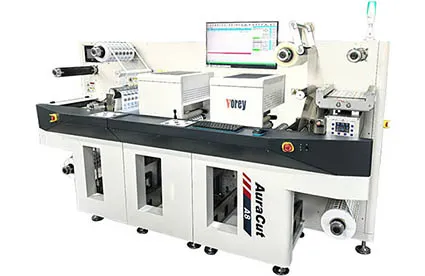
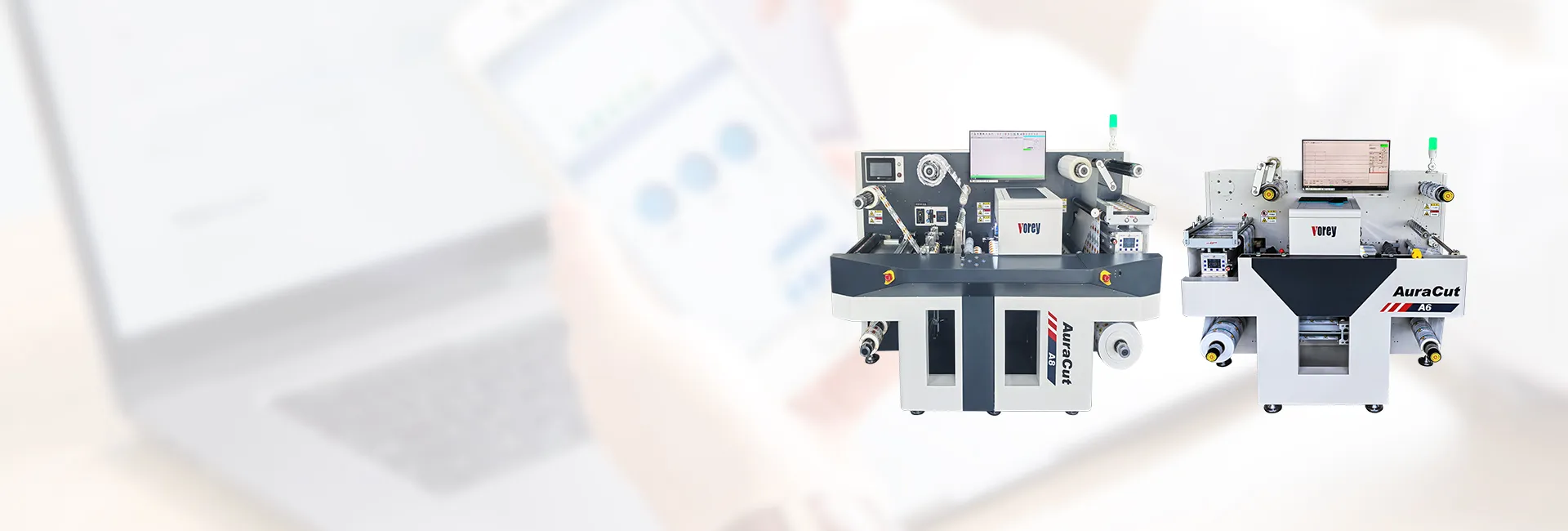

VOREY digital label die cutter machines are designed for short-run, customized and multi-SKU roll label production without requiring a dedicated physical die for every label design. Our digital cutting systems integrate intelligent blade cutting with functions such as laminating, matrix waste removal, slitting and rewinding to simplify label finishing in one workflow.
From compact two-head systems for smaller label shops to high-productivity multi-head machines for commercial label converters, VOREY offers digital label cutting solutions for different media widths, production volumes and automation requirements.
Request a Machine Recommendation
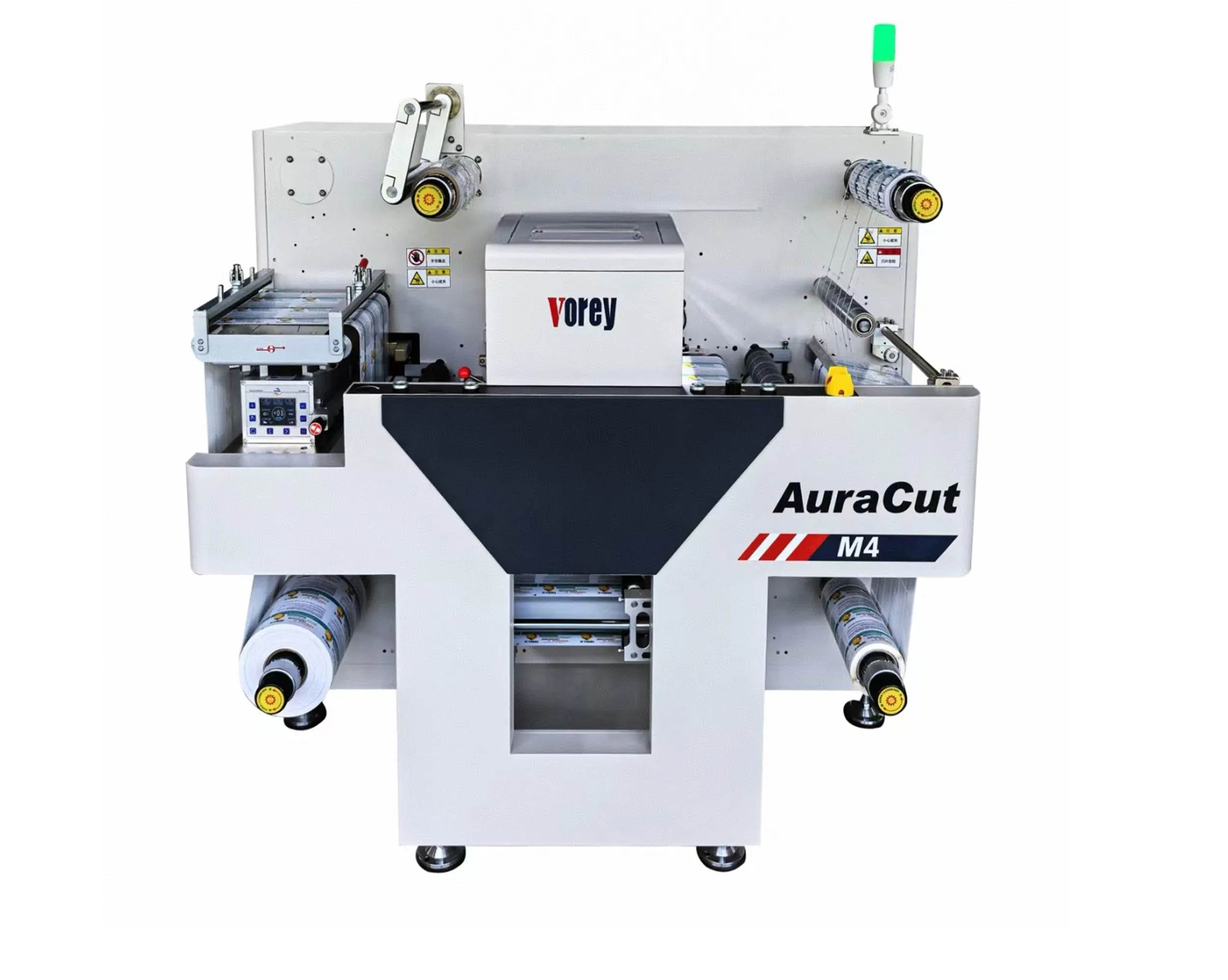
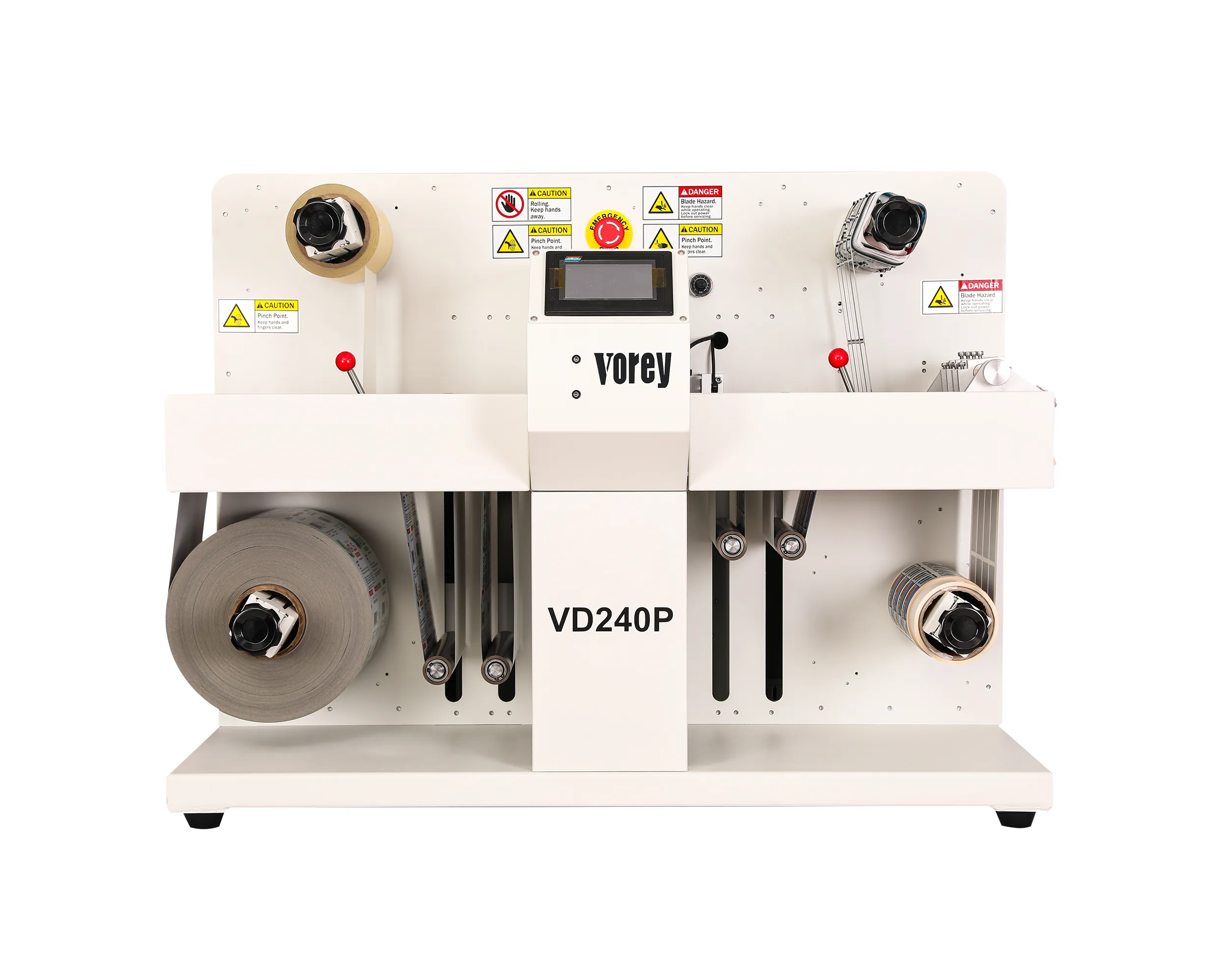
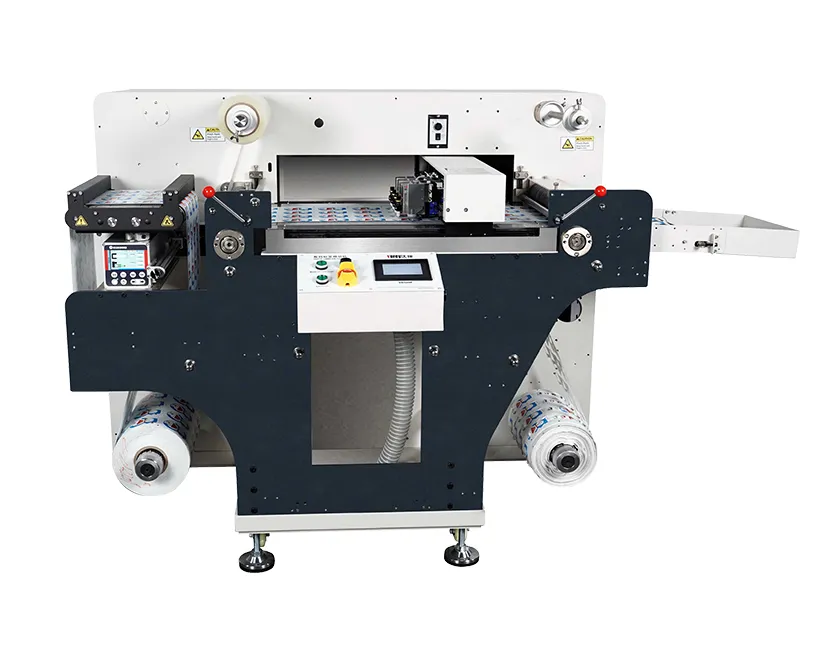
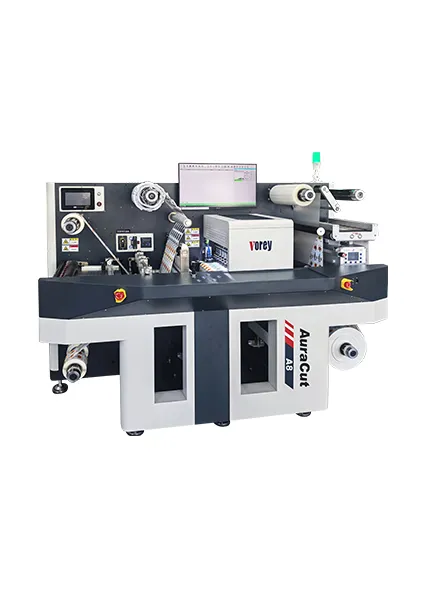
01 Production Volume
Consider the number of labels, jobs and SKU changes you process each day. Higher-volume production may benefit from more cutting heads and greater automation, while smaller operations may prioritize footprint and investment cost.
02 Label & Media Width
Match the machine's supported web width to the labels and rolls you typically process. For example, VOREY models cover applications ranging from compact 240 mm-class systems to approximately 350 mm media-width production systems.
03 Number of Cutting Heads
More cutting heads can improve productivity for suitable jobs. VOREY offers configurations ranging from two-head VD240P systems to multi-head AURACUT machines.
04 Job Change Frequency
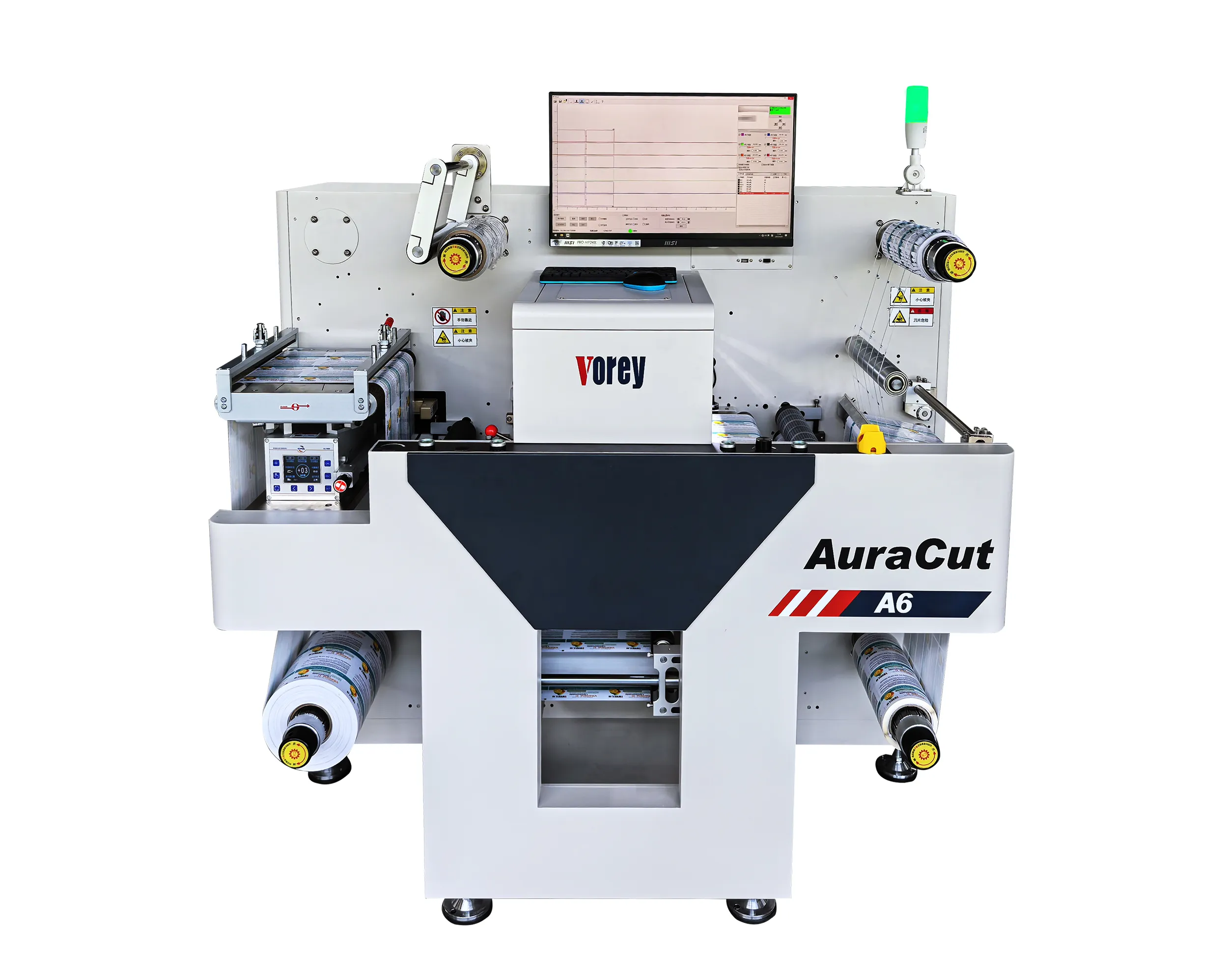
For label converters handling a high volume of short-run orders and multiple SKUs, blindly pursuing maximum speed is not necessary. Instead, a more flexible solution like the A6 would be the ideal choice.
05 Finishing Functions
It is necessary to clarify whether additional functions such as sheet cutting, liner waste removal, and top rewinding are required.
06 Automation & Workflow Integration
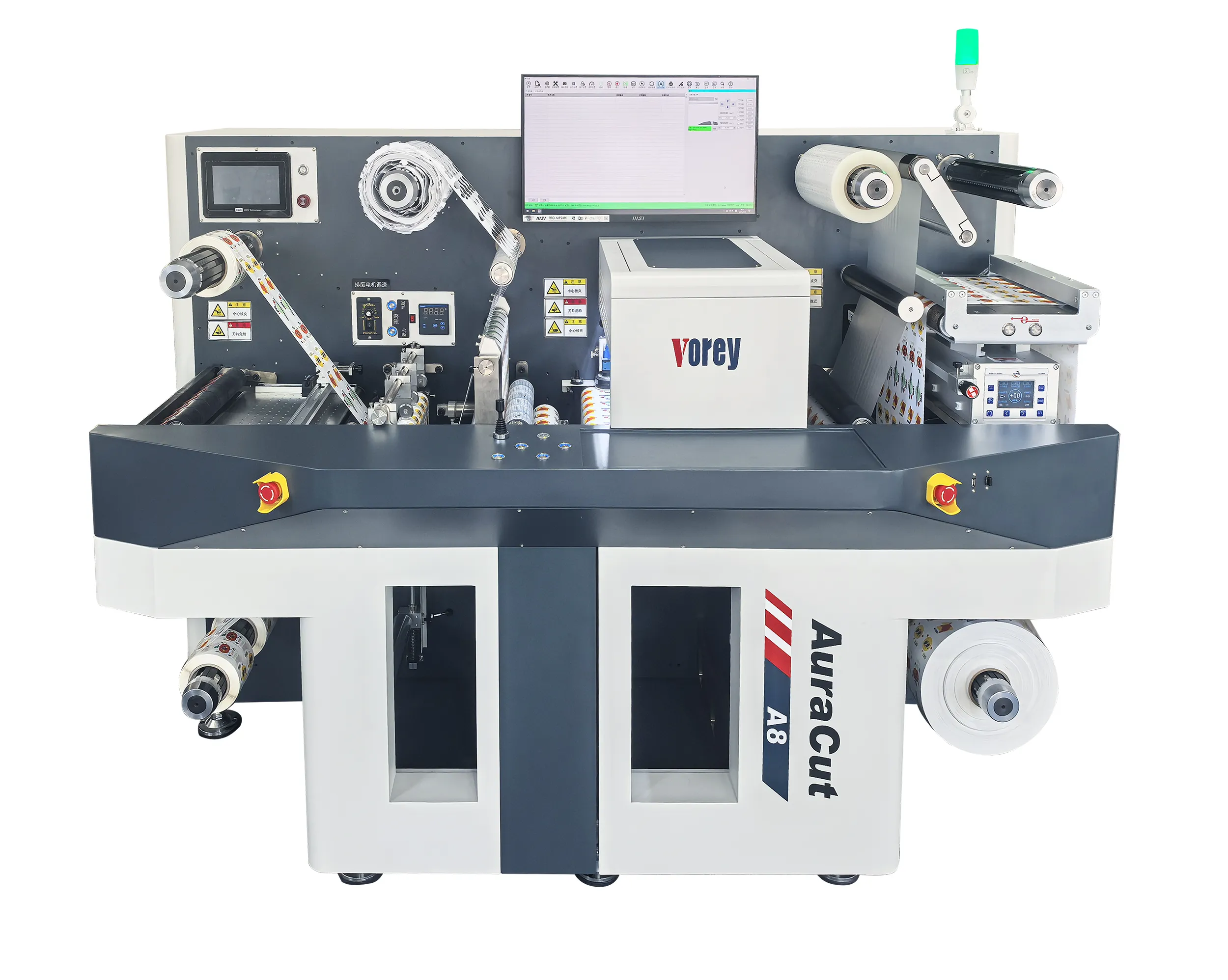
For users who prioritize automation and require unattended production, the Auracut series is the ideal choice.
Not sure which model fits your workflow? Send us your label width, material, average order size and daily production volume, and VOREY can recommend a suitable configuration.
| Model | Cutting Heads | Media Width | Best For | Key Advantage |
| VD240P | 2 | 80–240 mm | Small shops / short runs | Compact footprint |
| Auracut M4 | 4 | 100–350 mm | Flexible short runs | Cost-performance balance |
| Auracut A6 | 6 | 100–350 mm | Commercial production | Speed + automation |
| Auracut A8 | 8 | — | Higher-volume production | Advanced automation |
| VD320F/X | 4 | 40–340 mm | Integrated finishing | Multiple output configurations |
Kiss Cutting
Cut the label face material while keeping the backing liner intact.
Full Cutting
Cut completely through the media for individual labels or finished pieces where supported by the configuration.
Custom Shape Cutting
Produce circles, rectangles, irregular contours and frequently changing custom label shapes from digital cutting files.
Lamination
Apply protective or decorative film before the label enters the cutting stage on supported configurations.
Matrix Waste Removal
Automatically separate surrounding waste material after label cutting.
Slitting & Rewinding
Split finished label webs into narrower rolls and rewind them for downstream packaging or application.
| Factor | Digital Blade Cutting | Laser Cutting |
| Cutting Tool | Physical blade | Focused laser |
| Physical Custom Die | Not normally required | Not required |
| Initial Investment | Often lower | Generally higher |
| Consumables | Cutting blades | Laser-related maintenance |
| Suitable Workflow | Flexible short-run labels | High-flexibility tool-free laser finishing |
| Best Choice Depends On | Material, speed, shape, budget | Material, edge requirement, automation |
For applications requiring laser-based finishing, explore our digital laser label die cutter.
 What is a digital label die-cutter and how does it work?
A digital label die-cutter uses a digital cutting head equipped with a blade to precisely cut label shapes based on vector files, eliminating the need for traditional steel-rule dies.
What industries benefit from using digital label die-cutters?
Industries that benefit most include:
Packaging: Beverage, food, and cosmetic labels.
Pharmaceutical & Medical: Compliance labels, clinical trial labels.
Industrial: Asset tracking, inventory labels, warning labels.
Retail: Branded stickers, promotional labels.
E-commerce: Custom shipping labels and product packaging.
Wine & Spirits: Premium, short-run vintage labels.
How does a digital label die-cutter differ from traditional die-cutting machines?
No Plates, Zero Setup: Kill plate costs and change designs instantly—perfect for short runs and multiple SKUs. Fast Track to Market: Slash lead times from days to minutes for urgent jobs and rapid launches. Design Without Limits: Effortlessly handle variable data (QR codes, serialization) and complex gradients; every label can be unique.
Is a digital label die-cutter suitable for short-run production?
Yes, absolutely. This is one of its biggest advantages. Since there are no physical dies to manufacture, digital die-cutters are perfect for short runs, prototypes, and on-demand production. They allow you to produce small batches (even 1 piece) economically, which is often prohibitively expensive with traditional methods.
What industries benefit from using digital label die-cutters?
What are the key advantages of a digital label die-cutter?
Short-Run Efficiency: Economical for small quantities.
No Dies: Eliminates die cost and lead time.
High Flexibility: Instant design changes and variable data.
Reduced Waste: Precise cutting minimizes material waste.
Faster Time-to-Market: Setup is quick, so you can go from file to finished product faster.
Versatility: Handles a wide range of materials and finishes (e.g., kiss-cut, die-cut, perforated).
What factors should be considered when choosing a digital label die-cutter?
Volume: Match speed to your typical run length.
Materials: Ensure compatibility (Paper vs. Synthetics).
Tech: Knife for paper; Laser for synthetics.
Integration: Must sync with your existing printers/RIP.
Software: User-friendly UI, Adobe Illustrator support.
Footprint: Fits your floor space.
Support: Local service, training, and spare parts.
ROI: Balance total cost against labor/time savings.
1. What is a digital label printer?
A digital label printer prints label artwork directly from a digital file without requiring conventional printing plates. This makes digital printing especially suitable for short runs, multiple SKUs, customized labels and jobs that require frequent artwork changes. It can also reduce setup time when switching between different label designs.
2. What label materials can the Color DLP V3 print?
The VOREY Color DLP V3 is designed to work with a range of roll-fed label materials, including paper, PET, PP and PE substrates. Material surfaces, coatings and thicknesses can affect printing performance, so we recommend testing specialty or unverified materials before starting bulk production.
3. Is a digital label printer suitable for short-run label production?
Yes. Digital label printing is particularly suitable for short-run and multi-SKU production because artwork can be changed through digital files without creating a new printing plate for every design. This makes it useful for customized labels, seasonal packaging, private-label products, product variations and frequently changing orders.
4. How do I choose between digital label printing and flexographic printing?
The best printing method depends on your order volume, number of SKUs, substrate, artwork changes and production costs. Digital label printing is generally more flexible for short runs, multiple designs and frequent job changes, while flexographic printing can remain attractive for stable, high-volume repeat orders. Buyers should compare the complete production workflow rather than printing speed alone.
5. Do I need finishing equipment after using a digital label printer?
In most roll-label production workflows, printing is followed by one or more finishing processes. Depending on the finished product, you may require lamination, digital die cutting, matrix waste removal, slitting and rewinding. VOREY can help configure a digital label production workflow that combines printing with suitable downstream finishing equipment.
Contact Us 7/24 for More


 0574-87476008
 English