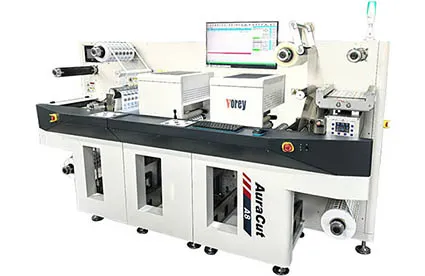
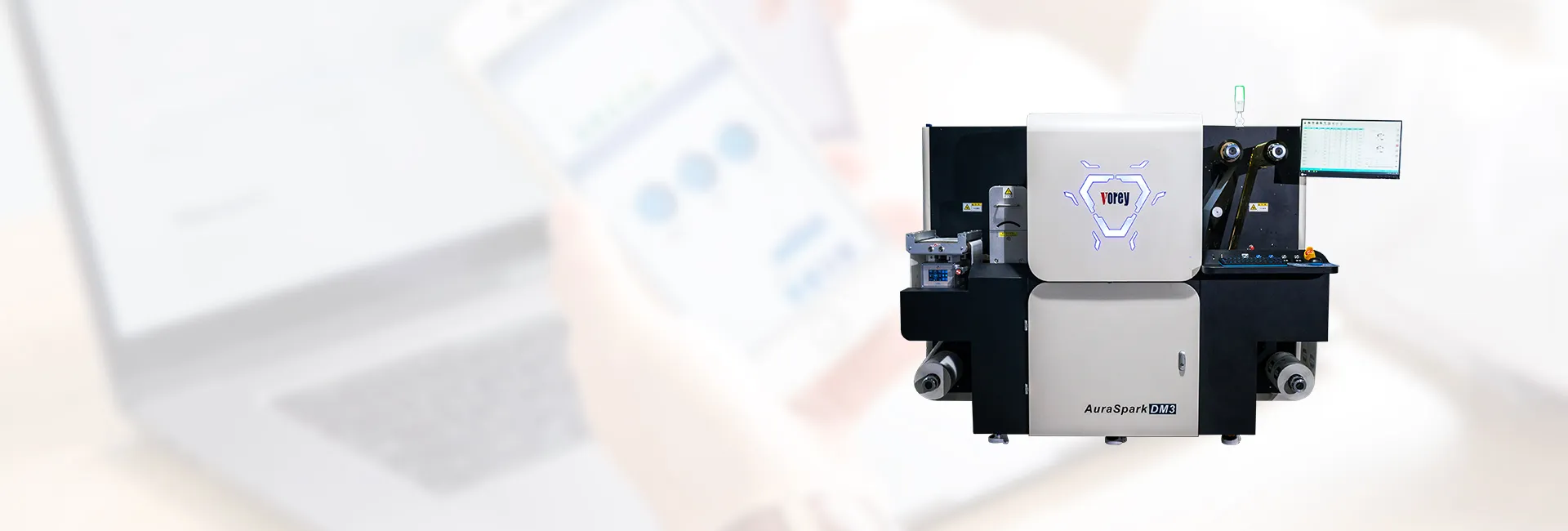

VOREY’s UV foil stamping machine is a roll-to-roll digital embellishment system designed for premium labels, short runs and frequently changing artwork. The DM3 combines digitally controlled UV varnish, LED-UV curing and foil application to produce metallic foil, raised Spot UV, reverse varnish and Braille effects. With a media width of 70–360 mm and production speeds of 3–25 m/min, it is designed for label converters handling customized packaging, multiple SKUs and value-added finishing jobs.
VOREY’s UV foil stamping machine is a roll-to-roll digital embellishment system designed for premium labels, short runs and frequently changing artwork. The DM3 combines digitally controlled UV varnish, LED-UV curing and foil application to produce metallic foil, raised Spot UV, reverse varnish and Braille effects. With a media width of 70–360 mm and production speeds of 3–25 m/min, it is designed for label converters handling customized packaging, multiple SKUs and value-added finishing jobs.
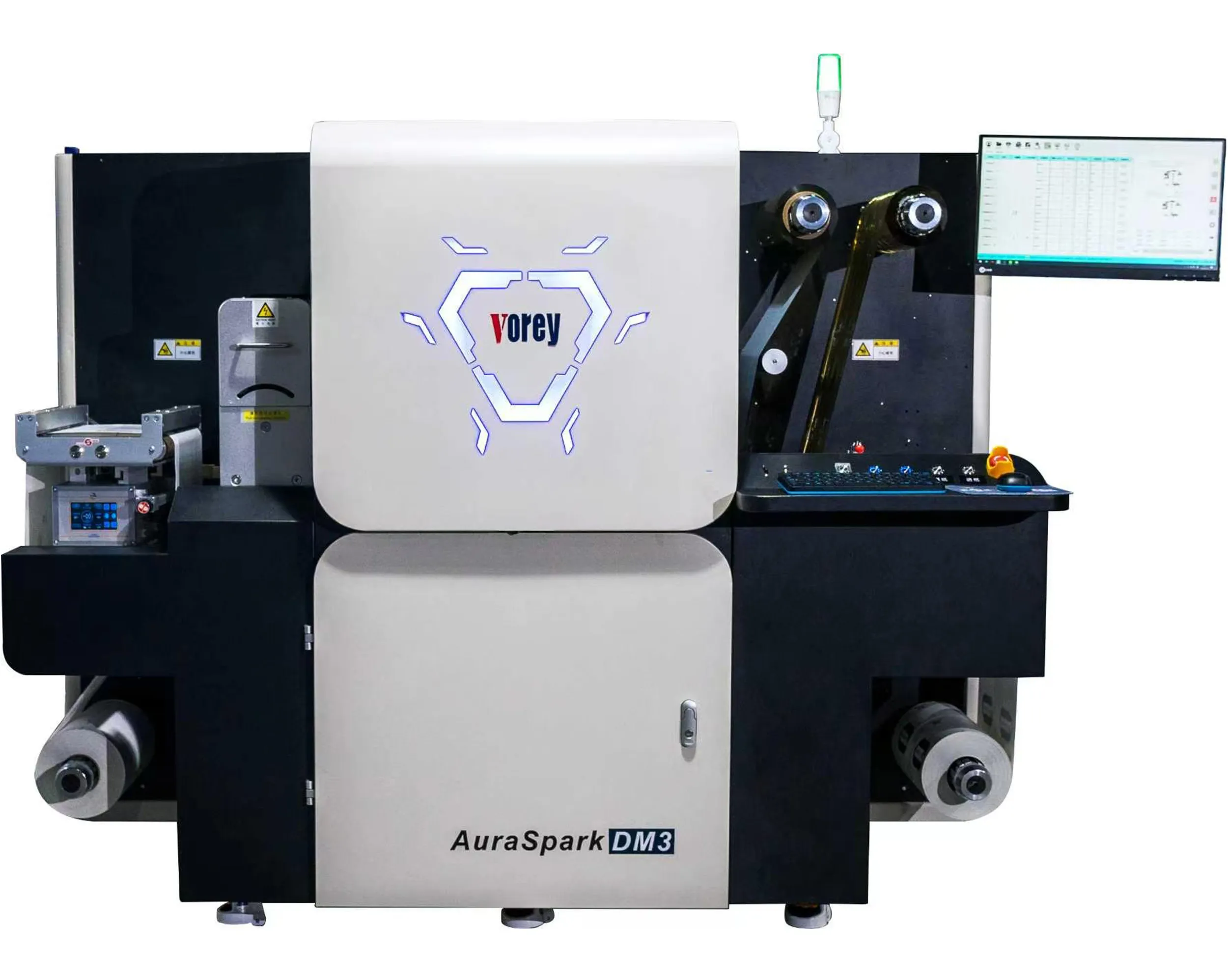
A UV foil stamping machine creates a digital embellishment image from an artwork file and applies varnish, foil or raised decorative effects to selected areas of a printed web. Because the digital image can be changed through production files, converters can prepare new logos, text, patterns and SKU versions without making a conventional plate for every digital embellishment design.
The exact foil-transfer method depends on the installed configuration. The DM3 product information lists cold-foil and hot-foil functions, while its digital UV imaging section uses UV material and LED curing. Buyers should confirm which foil module, consumables and tooling requirements apply to their intended job before ordering.
The foil or varnish layer is prepared as a controlled production file.
Drop-on-demand technology deposits UV material on selected label areas.
LED-UV curing prepares the deposited image for the selected finishing effect.
The web receives metallic foil, raised varnish or another configured embellishment.
Configuration Note
Foil module, production speed, achievable build height, variable-image capability and material range may change with the selected configuration and job conditions. Confirm final specifications with VOREY using the actual artwork, printed roll and foil before quotation.
The DM3 is VOREY's roll-to-roll model for digital foil and UV embellishment. The following overview is based on the currently published product data; project-specific values and optional functions should be reconfirmed before purchase.
| Specification | Published DM3 Data |
|---|---|
| Production speed | 3–25 m/min |
| Print / embellishment width | 280 mm or 350 mm |
| Media width | 70–360 mm |
| Imaging technology | Drop on demand, UV material, LED-UV curing |
| Resolution modes | 720×720 / 720×1440 / 720×2880 dpi |
| Grayscale | 7 levels |
| Published registration accuracy | ±0.15 mm |
| Published substrate thickness | 60–350 μm |
| Listed materials | Selected coated/uncoated paper, PET, PP, PE and synthetic paper |
| Foil method | Cold or hot foil according to the selected configuration; confirm with VOREY |
| Maximum roll diameter / core | 480 mm roll diameter / 76.2 mm core |
| Maximum published roll weight | 47.2 kg |
For machine dimensions, power requirements, operating environment, warranty and the latest confirmed configuration, review the complete DM3 specifications or send VOREY your project information.
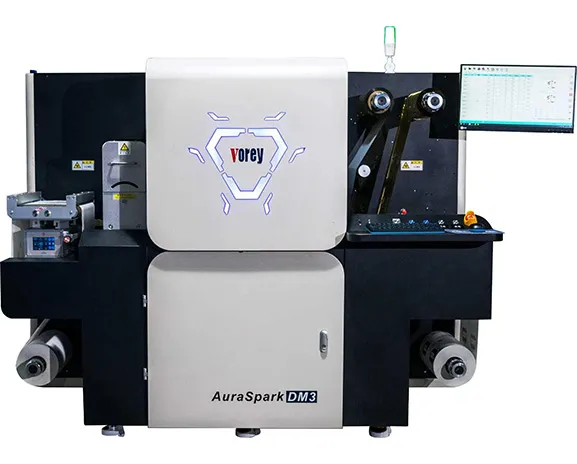
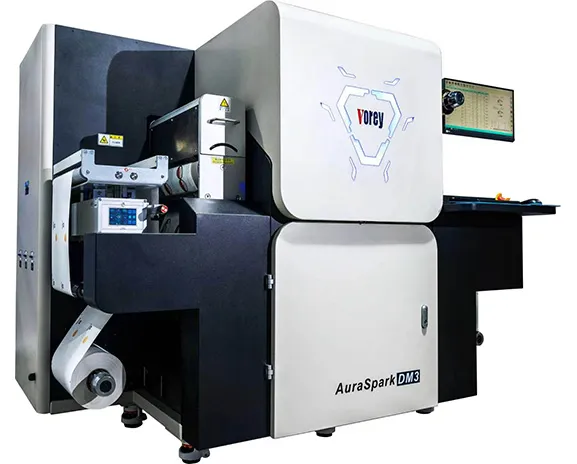
The DM3 is designed to add visual and tactile value after printing. Available effects should be evaluated with the real label artwork because foil area, line width, varnish build, registration and surface condition all influence the finished result.
Gold, silver and selected decorative foils for logos, borders, product names and premium label details.
Raised transparent varnish for tactile logos, patterns and selected graphics that need visual contrast.
Controlled gloss-and-matte contrast that highlights designated areas without changing the main printed design.
Selected raised-dot applications subject to the required standard, dot geometry, material and validated equipment settings.
Do not approve an effect from a screen preview alone. A production sample should confirm foil release, edge definition, solid-area uniformity, tactile height, registration and durability.
Depending on surface treatment, coating and machine configuration, the DM3 may process selected coated and uncoated papers, PET, PP, PE and synthetic label materials. Compatibility should be confirmed using the customer's actual printed roll because adhesion and foil transfer can change with ink, coating, surface energy and foil formulation.
| Test Item | What VOREY Should Confirm |
|---|---|
| Material | Paper, PET, PP, PE or synthetic stock; thickness, roll width and construction. |
| Printed surface | Ink technology, coating, lamination and whether corona treatment is required. |
| Artwork | Fine text, thin lines, large solid areas, foil coverage and raised-effect requirements. |
| Foil | Color, formulation, supplier recommendation, release and compatibility with the selected process. |
| Registration | Print-mark quality, web tension and alignment with printed graphics and finished edges. |
| Durability | Adhesion, rubbing, moisture, chemicals, temperature and the final label application. |
| Workflow | Unwind direction, roll core, finishing sequence, die cutting, slitting and rewinding. |
Practical rule: do not select a digital foil printing machine from a generic material list. Send an actual printed roll, artwork file and target foil to VOREY so the complete combination can be tested before commercial production.
The strongest business case normally comes from job variety and value-added finishing rather than from maximum speed alone. The following operations are likely to benefit from a plate-free digital embellishment workflow.
Companies processing many small jobs and frequent artwork changes.
Printers adding metallic foil and tactile finishing to digital print capacity.
Suppliers serving cosmetics, wine, specialty food and personal-care brands.
Operations managing regional, language, fragrance, flavor or seasonal versions.
Teams producing samples, test-market packaging and limited editions.
Plants adding a flexible route for urgent and customized orders.
| Production Situation | Initial Fit | What to Check |
|---|---|---|
| Many short jobs every day | Strong fit | Daily changeovers and required throughput |
| Frequent foil-artwork changes | Strong fit | File preparation and approval workflow |
| Multiple SKUs in one order | Strong fit | Quantity and artwork variation per SKU |
| Prototypes and test-market packaging | Strong fit | Minimum setup quantity and sample quality |
| Variable foil or raised elements | Configuration check | RIP, software and supported variable workflow |
| One unchanged, high-volume repeat job | Compare processes | Total cost versus conventional hot foil |
| Untested specialty film | Material test required | Adhesion, curing and finished durability |
If your order mix includes both large repeat runs and many short customized jobs, the two processes can be complementary. Read the detailed comparison of hot foil stamping versus digital foil printing before calculating the total cost of each workflow.
Digital foil creates the most production value when it is connected to printing and finishing. A typical short-run workflow can be organized as follows.
Artwork & Prepress
Digital Label Printing
UV Foil & Varnish
Digital Die Cutting
Slitting & Rewinding
A digital label printer reduces dependence on conventional printing plates, the DM3 adds foil and varnish effects, and a digital label die cutter can process changing label shapes without manufacturing a dedicated cutting die for every design.
When evaluating the complete line, confirm roll width, web direction, tension, print marks, coating sequence, lamination requirements, matrix removal, slitting and rewinding—not only the specifications of one machine.
See the roll-to-roll material path, machine operation and label processing sequence.
Measure each design quantity instead of only the combined order total.
Compare changeover labor and stopped time with productive machine time.
Evaluate fine detail, large solid areas, registration and foil use per label.
Define acceptable adhesion, edge sharpness, texture and rub resistance.
Confirm print width, foil module, curing, software and optional equipment.
Review installation, training, spare parts, consumables and technical support.
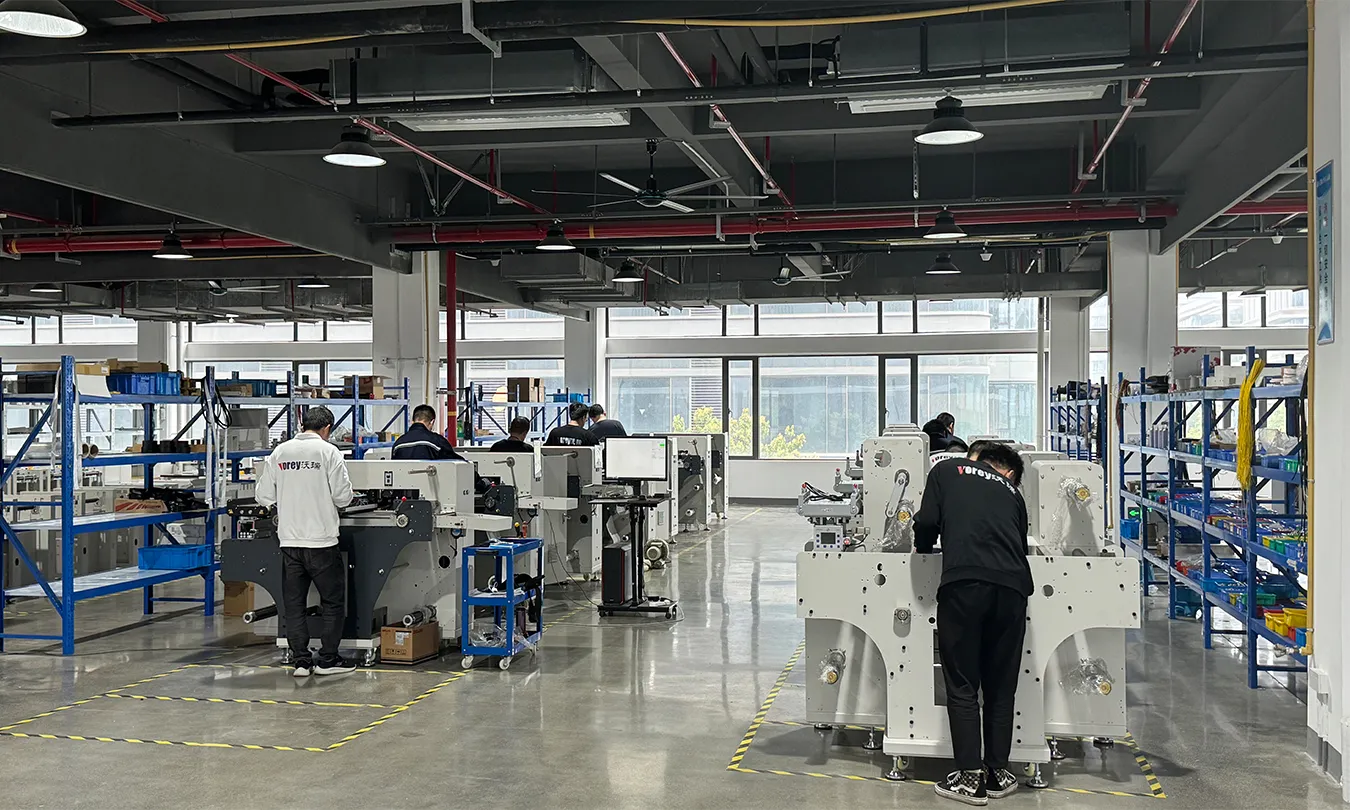
Equipment selection should include more than a specification sheet. Ask to see machine assembly, quality-control procedures, operator training, application tests and after-sales support. VOREY serves professional printing and converting customers in international markets and can review the complete workflow from printed roll to finished label.
It is digital embellishment equipment that uses artwork files and UV imaging to place varnish, foil or raised effects on selected areas of printed labels. The exact foil-transfer method depends on the machine configuration.
The digital UV image does not require a conventional plate for every new artwork. Tooling requirements for a selected cold-foil or hot-foil configuration should be confirmed with VOREY before the project is quoted.
Published functions include metallic foil, raised Spot UV, reverse varnish and selected Braille or raised-dot effects. Actual results depend on artwork, UV material, foil, substrate and machine settings.
It is designed for flexible production where orders are short, artwork changes frequently or one order contains multiple SKUs. A cost comparison should still include consumables, machine time, waste and required throughput.
Current product information lists selected coated and uncoated paper, PET, PP, PE and synthetic paper. The customer's actual printed material should be tested because coatings, inks, surface energy and foil formulations affect performance.
Digital artwork supports faster design changes, but true item-to-item variable embellishment depends on the RIP, software, file structure and selected equipment configuration. Send a test file to confirm the required variable workflow.
Traditional hot foil normally uses a heated physical die. Digital foil uses a digitally controlled embellishment image and is often better suited to short runs and frequent artwork changes. The foil-transfer method can vary by digital system.
It can form part of a roll-to-roll workflow that includes digital printing, embellishment, lamination, die cutting, slitting and rewinding. Media width, web direction, print marks, tension and finishing sequence must be checked for the complete line.
Provide the artwork file, printed roll material, roll width, label size, foil color, required effect, quantity per SKU, expected production speed and final application. These details help VOREY prepare a relevant test rather than a generic demonstration.
Send VOREY your artwork, roll material, label dimensions, foil color, required effect and expected production quantity. Our team can evaluate material compatibility, registration requirements and the most suitable DM3 configuration before quotation.
Request a DM3 Material Test View Full DM3 SpecificationsFor additional print-finishing terminology and industry education, visit the Foil & Specialty Effects Association.
Contact Us 7/24 for More


 0574-87476008
 English