
Material Selection · Printing · Finishing
BOPP labels combine a polypropylene film face with a printable surface, adhesive and release liner. Their moisture resistance, clarity and range of finishes make them a common choice for beverage, food, personal-care and household-product packaging—but successful production depends on matching the exact film grade to the printer, ink or toner, adhesive and finishing process.
Start with
The right BOPP face stock
Confirm
Print and coating compatibility
Validate
Finishing on the actual roll
BOPP labels are labels made with biaxially oriented polypropylene film as the face material. “Biaxially oriented” means the polypropylene film is stretched in both the machine direction and the transverse direction during manufacture. This process helps create a thin, strong and dimensionally stable film with good clarity and moisture resistance.
In pressure-sensitive label construction, BOPP is only one part of the finished material. A usable roll also includes a print-receptive surface or coating, an adhesive selected for the container and application environment, and a release liner. White, clear, matte and metallized BOPP grades may look similar on a roll, but they can behave differently during printing, foiling, die cutting and matrix removal.
A film supplier such as Cosmo Films separates BOPP label materials into pressure-sensitive face stocks, wrap-around films, in-mould label films and direct-thermal grades. This article focuses mainly on roll-fed pressure-sensitive labels used in digital label printing and finishing.
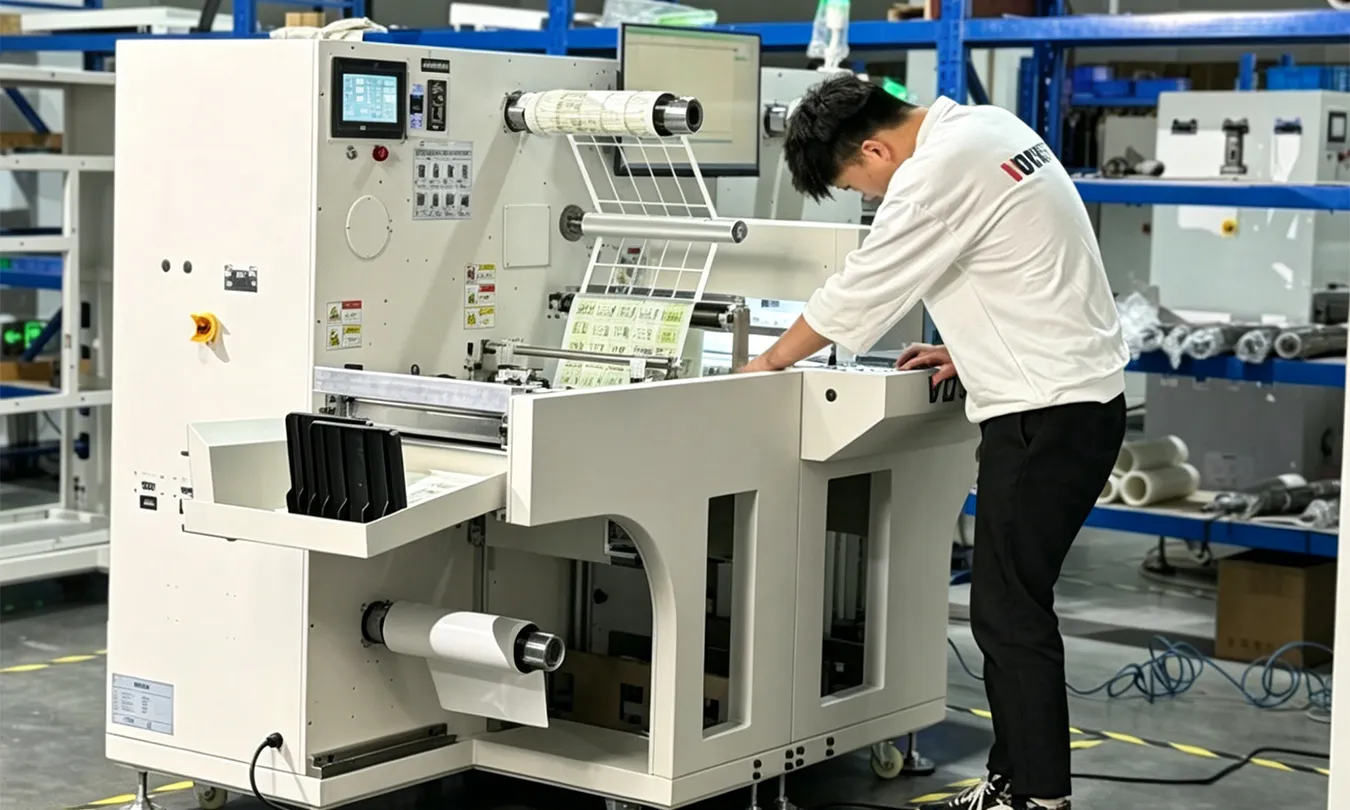
Roll-fed labels being checked on VOREY digital label finishing equipment. The actual BOPP grade, adhesive, liner and roll construction should be tested together.
Understanding the layer structure helps explain why the word “BOPP” alone is not enough to confirm machine compatibility.
The cutting blade must normally pass through the BOPP face and adhesive while leaving the liner usable. Too little cutting pressure causes incomplete label release; too much pressure scores the liner, weakens the web and can create breaks during matrix removal or dispensing.
The right appearance is important, but converters should also compare opacity, topcoat, stiffness, caliper, adhesive and liner—not color alone.
| BOPP Type | Visual Result | Typical Uses | Production Check |
|---|---|---|---|
| White BOPP | Opaque white base supporting strong color contrast | Food, beverages, personal care and household products | Compare gloss, opacity and coated side |
| Clear BOPP | Transparent “no-label” appearance | Clear bottles, cosmetics, beverages and premium packaging | Check ink opacity, adhesive clarity and container color |
| Metallized BOPP | Reflective silver or metallic base | Cosmetics, wine, spirits and promotional labels | Confirm printable side, opacity strategy and scuff protection |
| Matte BOPP | Low-glare, softer visual finish | Premium foods, natural products and personal care | Test toner or ink anchorage and rub resistance |
Important: “Clear BOPP” or “white BOPP” is not a complete machine specification. Two rolls with the same description can use different coatings, adhesives and liners. Always test the exact production construction.
| Selection Factor | BOPP Film | Paper | PET Film |
|---|---|---|---|
| Moisture resistance | Generally good | Usually limited without protection | Generally good |
| Clear label option | Excellent clarity is available | Not applicable | Clear grades are available |
| Heat and dimensional stability | Moderate; verify for heated processes | Depends on coating and humidity | Usually stronger at elevated temperature |
| Conformability | Good for many rigid and squeezable containers | Best on suitable dry, rigid surfaces | Often stiffer, depending on gauge |
| Typical reason to choose | Moisture resistance, visual finish and versatility | Natural appearance and economical general labeling | Durability, stiffness and higher-temperature performance |
These are general comparisons. Performance varies with face-stock gauge, coating, adhesive, liner, container and application conditions.
Yes, but the roll must be qualified for the specific digital imaging process. BOPP itself has relatively low surface energy, so an untreated film may not provide reliable wetting or adhesion for every ink, coating or toner system. The print surface may therefore use corona treatment, a primer or a purpose-designed topcoat.
Surface-treatment specialists explain that corona treatment increases surface energy to improve the wettability and adhesion of inks, coatings and adhesives. The required level is not universal; it depends on the polymer, ink chemistry, printing process, storage history and production conditions. Enercon publishes useful surface-energy guidance for printing polymer films, but the final target should still be confirmed with the film and ink suppliers.
Use a BOPP construction approved for the toner system and fusing conditions. Confirm toner adhesion, heat response, color density and rub resistance before production.
Check surface treatment or topcoat, curing, flexibility and adhesion. Heavy ink coverage, clear films and squeezable containers require application-level testing.
BOPP can be printed with suitable water-based, solvent-based or UV systems. Ink, treatment, anilox, drying or curing and press setup must work as one controlled process.
For short runs, multiple SKUs and frequent artwork changes, a roll-fed digital label printer can reduce conventional plate preparation. Before ordering material, send the exact BOPP data sheet and a sample roll to the equipment supplier rather than relying only on the generic material name.
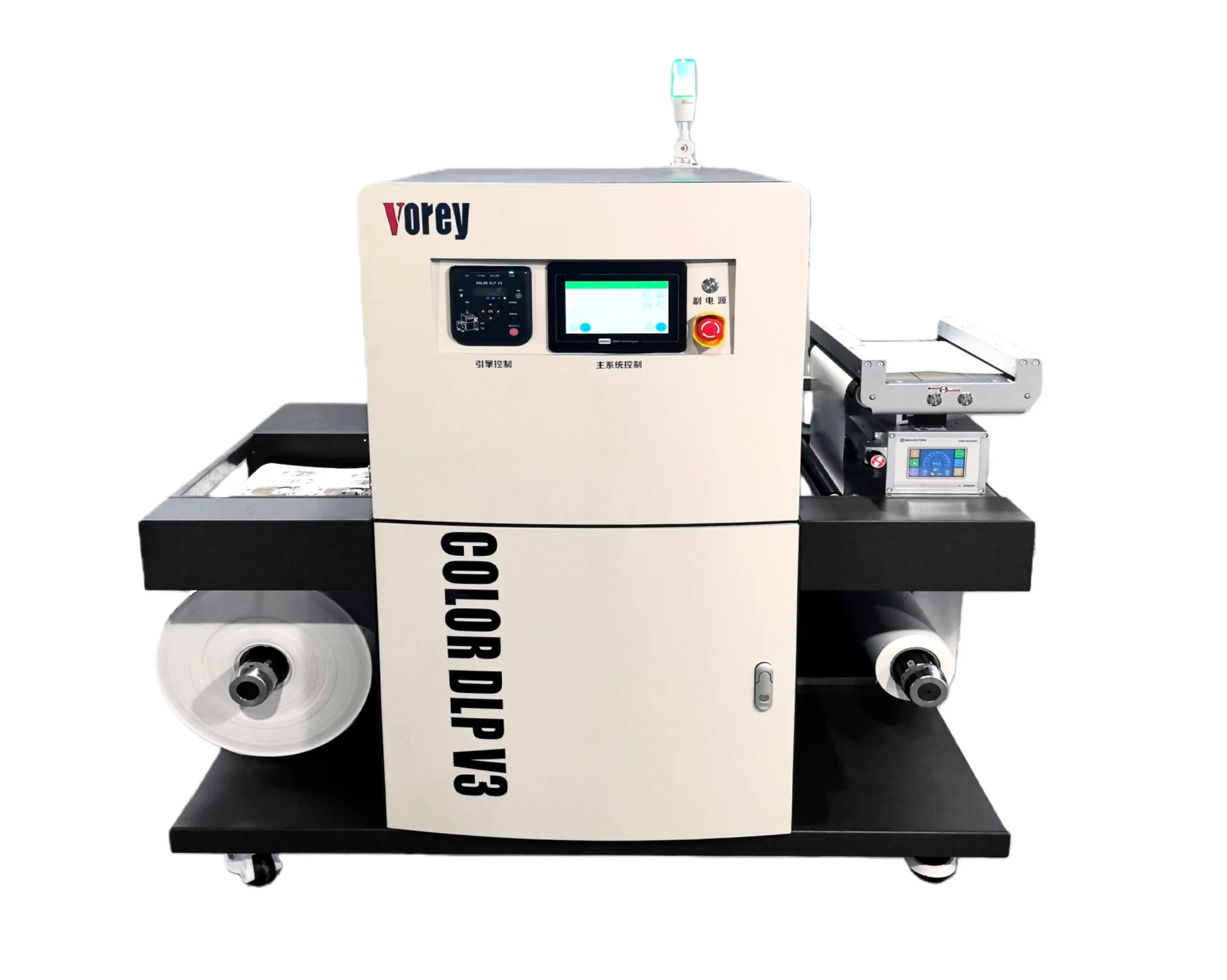
A roll-to-roll digital label printer must be evaluated with the complete label construction, not the face film alone.
1. Confirm the printable side
Identify which side is top-coated or treated and verify the correct unwind orientation.
2. Run an adhesion test
Check image adhesion after printing and curing or fusing, then repeat after the label has conditioned.
3. Inspect dense coverage
Include small text, barcodes, gradients, solid areas and any critical brand color in the test artwork.
4. Finish the same sample
Do not approve print alone. Laminate or varnish, foil, die cut, strip the matrix, slit and rewind the sample.
5. Apply it to the package
Test the real container after cleaning, filling and conditioning under the intended temperature and moisture conditions.
6. Confirm roll conversion
Check web tracking, static, tension, liner strength, finished roll diameter and winding direction.
A clear laminate can improve scuff, moisture and chemical resistance while changing gloss and tactile feel. A varnish can provide overall or selective protection with less added thickness. Compatibility must be verified because the coating, adhesive and application environment affect the final result. A surface that prints well is not automatically ideal for every laminate or varnish.
BOPP labels can use foil and raised decorative effects when the film, printed surface and decoration chemistry are compatible. Because film can respond to heat and pressure differently from paper, conventional hot foil requires careful temperature, dwell and pressure testing. A digital UV foil stamping machine can be considered for variable or short-run embellishment workflows, but the actual printed BOPP roll must still be tested for adhesion, curing and deformation.
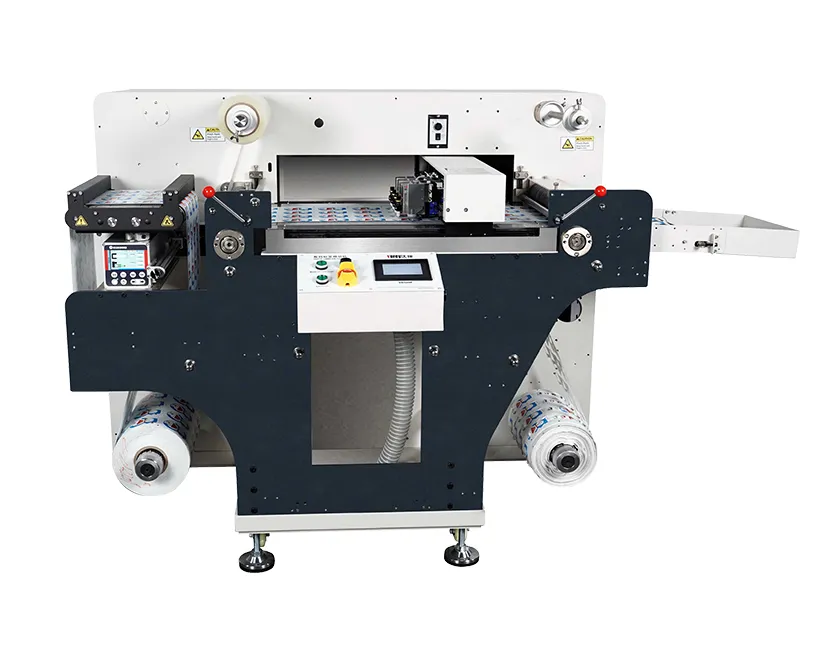
Thin film, aggressive adhesive, tight corner radii and a weak liner can make matrix stripping difficult. Stable web tension and an appropriate cutting profile are as important as cutting accuracy. For short runs and changing shapes, a digital label die cutter removes the need for a dedicated physical die, allowing artwork and cut paths to change from job to job.
BOPP die-cutting checks
Use the exact face film, adhesive and liner planned for production.
Check kiss-cut depth across the full web, not only in the center.
Include the smallest radius and narrowest matrix area in the test file.
Observe edge lift, adhesive stringing and liner marks.
Run matrix removal at the intended production speed.
Confirm that the finished labels dispense cleanly on the customer’s applicator.
The finished roll must match the downstream applicator. Confirm finished web width, maximum roll diameter, core size, face-in or face-out winding and label orientation. Proper slitting and controlled label rewinding and unwinding help avoid telescoped rolls, loose edges and inconsistent tension.
| Observed Problem | Possible Area to Check | Recommended Validation |
|---|---|---|
| Ink or toner scratches off | Wrong topcoat, low surface energy, contamination or incomplete cure/fuse | Repeat adhesion and rub tests after conditioning |
| Clear label looks cloudy | Adhesive clarity, dust, bubbles, container surface or application pressure | Apply to the actual clean container and inspect after dwell time |
| Label edges lift | Adhesive choice, small container radius, contamination, squeeze or cold/wet application | Test filled containers through the real use cycle |
| Matrix tears during stripping | Cut depth, corner radius, narrow waste, tension, speed or adhesive behavior | Test worst-case shapes at target production speed |
| Finished rolls telescope or wrinkle | Web guiding, uneven tension, slit quality or excessive winding hardness | Inspect roll edges and unwind the finished roll through the applicator |
Clear or white BOPP can support shelf appeal and moisture resistance for chilled bottles. Condensation and adhesive performance must be tested.
BOPP labels are used on jars, tubs and rigid packs. The complete label construction should meet the relevant packaging and compliance requirements.
Clear and metallized films create premium effects, while the adhesive must tolerate curved or squeezable containers and product exposure.
Film labels can provide better resistance than unprotected paper, but chemical splash, abrasion and adhesive compatibility require dedicated testing.
BOPP is a polypropylene film, but that does not make every finished BOPP label or labelled package automatically recyclable. Recyclability depends on the container material, label coverage, inks, coatings, metallization, adhesive, liner, local collection and sorting infrastructure, and the rules used in the target market.
For North American packaging, consult the APR Design Guide and obtain evidence for the complete packaging system before making a recyclability claim. Matching a PP label with a PP container may support a mono-material design strategy, but compatibility must be validated rather than assumed.
A useful material request should describe the whole job. Send the following information to the material and equipment suppliers:
White, clear, matte or metallized appearance
Face-stock brand, product code and thickness
Coated or treated side and intended printing process
Adhesive type and release-liner construction
Container material, shape and surface condition
Application and service temperatures
Roll width, outside diameter and core diameter
Winding direction and face-in or face-out requirement
Printing speed and expected monthly volume
Varnish, laminate, foil or other decoration
Label size, shape, corner radius and gap
Finished-roll specifications for the applicator
BOPP means biaxially oriented polypropylene. It identifies the film used as the label face material, but it does not identify the coating, adhesive, liner or complete performance specification.
BOPP face film is moisture resistant, but “waterproof” performance depends on the ink or toner, protective coating, adhesive, container and length of exposure. Test the complete label in the real application.
No. The BOPP grade must be compatible with the printer’s imaging technology, ink or toner, curing or fusing conditions, and web-handling limits. Use qualified material and test the exact roll.
Clear BOPP is selected for transparency and a no-label appearance. White BOPP provides an opaque base that normally supports stronger contrast without relying on the package color. Clear labels may require an opacity strategy for white text or color-critical artwork.
Yes, when the laminate or varnish is compatible with the printed surface and intended use. Adhesion, appearance, flexibility and resistance should be tested after the full process.
Yes. BOPP is widely converted into shaped pressure-sensitive labels. Cutting depth, blade condition, liner strength, adhesive behavior, corner radius, web tension and matrix design all affect production reliability.
They can, but the face-stock gauge, adhesive and container geometry must be selected for conformability. Conduct repeated squeeze and recovery testing with the filled package.
Send an original production roll or a representative roll using the same face stock, topcoat, adhesive and liner. Include artwork with solid coverage, small text, barcodes and the most difficult cutting shape.
Send VOREY your BOPP material data sheet, roll dimensions, printing method, artwork, finishing requirements and target production speed. The team can review the workflow and arrange a compatibility test before equipment selection.
Request a BOPP Compatibility Review

 0574-87476008
 English