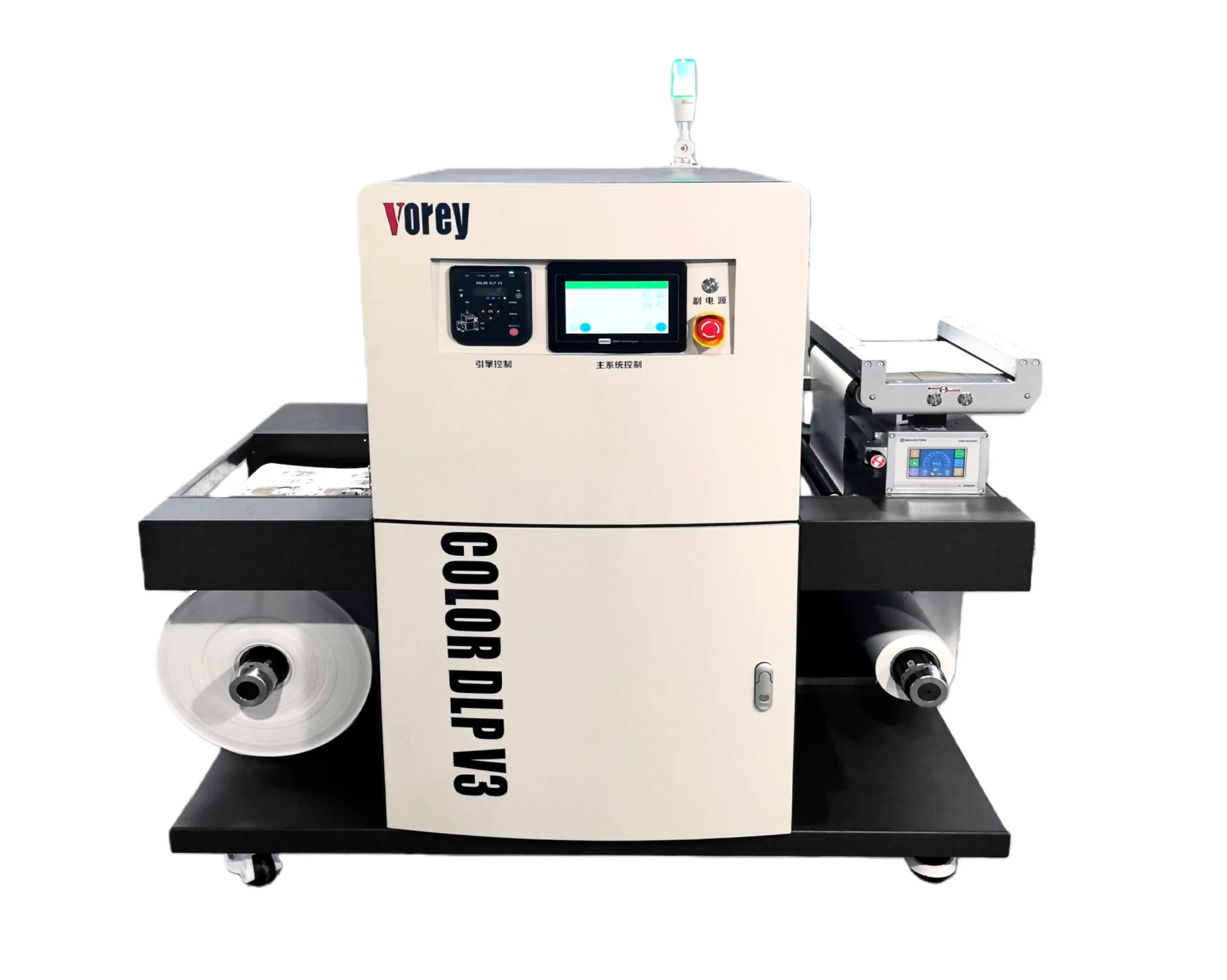

Choosing the right label cutting technology affects much more than the shape of the finished label. It can influence setup time, tooling cost, production speed, minimum order quantity, job changeover efficiency, and the types of custom orders a label converter can accept.
For long, repetitive production runs, traditional die cutting remains a proven and efficient solution. For short runs, multiple SKUs, prototypes, and frequently changing label designs, digital die cutting provides greater flexibility because it can eliminate the need to manufacture a physical cutting die for every new design.
This guide compares digital die cutting and traditional die cutting to help label converters, printing companies, and packaging manufacturers determine which finishing method is better suited to their production requirements.
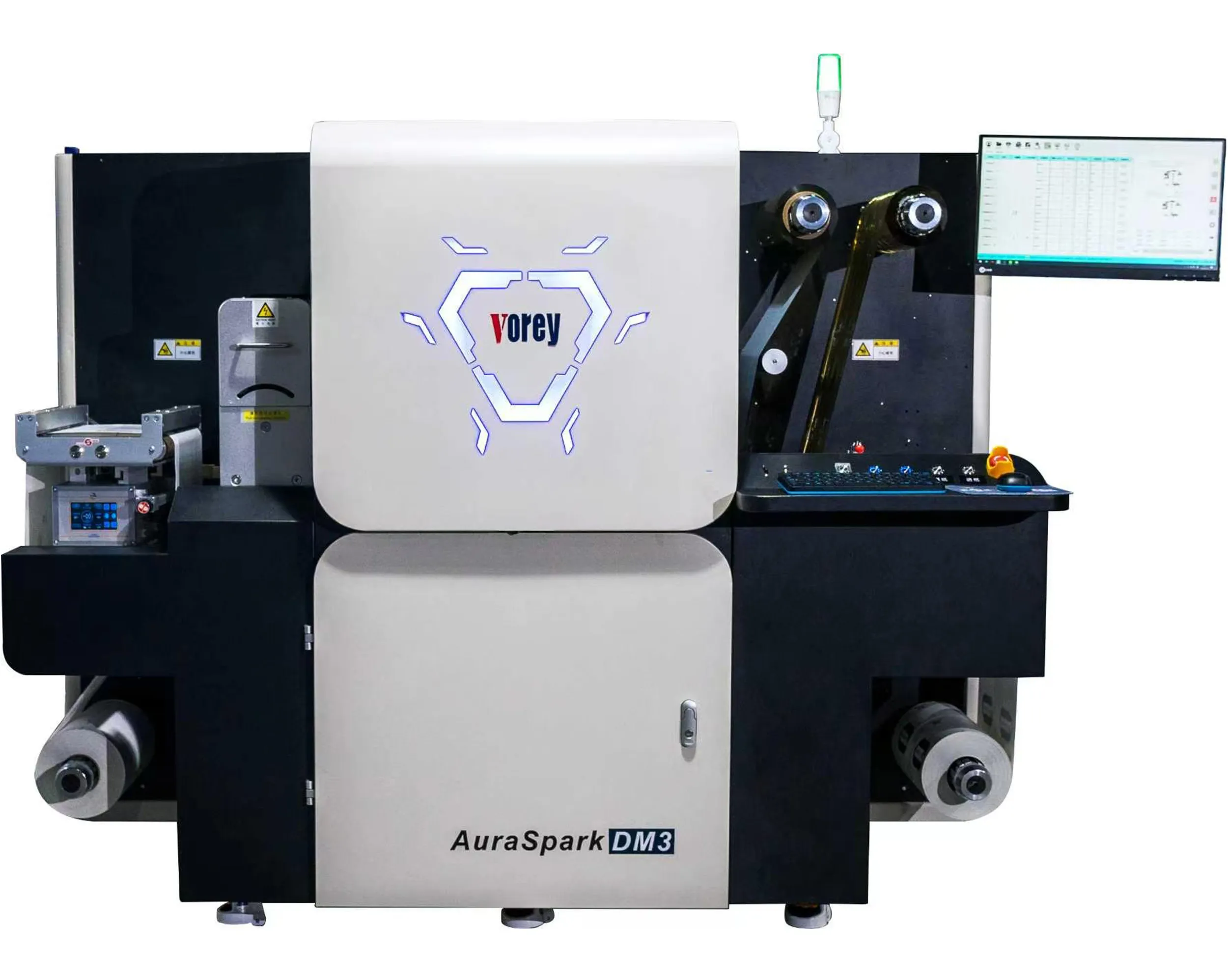
Digital die cutting is a finishing process that uses digitally controlled cutting tools rather than a fixed physical die to create label shapes. A digital cutting file defines the cutting path, allowing the machine to process different shapes and sizes by changing the digital artwork or cutting data.
Depending on the equipment configuration, a digital die cutting machine may perform operations such as:
Kiss cutting
Full cutting
Perforating
Creasing
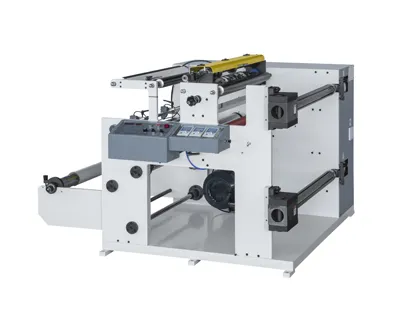
Slitting
Matrix removal
Laminating
Because physical dies are not required for every new label shape, digital cutting is particularly suitable for short-run labels, customized orders, prototypes, and businesses that frequently switch between different SKUs.
A digital label die cutter can also be combined with digital printing equipment to create a more flexible print-and-finish workflow for on-demand label production.
Traditional die cutting uses a physical cutting die to cut or kiss-cut labels into a specific shape. Depending on the production process, this may involve rotary dies, flexible dies, magnetic cylinders, or flatbed cutting dies.
Once the die has been manufactured and installed, the machine repeatedly cuts the same shape as the material moves through the finishing process.
This method is widely used in high-volume label converting because it can provide fast and consistent production when processing large quantities of the same label design.
The main limitation is that a new die may be required when the label shape or dimensions change. For converters handling many short-run or customized jobs, die manufacturing and job changeovers can increase both cost and lead time.
| Factor | Digital Die Cutting | Traditional Die Cutting |
|---|---|---|
| Physical Cutting Die | Normally not required | Required for each specific shape |
| Setup Time | Relatively short | Includes die preparation and installation |
| Short Runs | Highly suitable | Tooling cost may reduce cost efficiency |
| Long Runs | Suitable depending on machine speed and application | Highly efficient for repetitive high-volume jobs |
| Design Changes | Change the digital cutting file | May require a new physical die |
| Custom Shapes | Flexible for frequent changes | Efficient once the corresponding die is available |
| Prototyping | Highly suitable | Less practical when a new die must be produced |
| Multiple SKUs | Efficient for frequent job changes | Additional dies may be needed |
| Typical Application | Short runs, custom labels, prototypes, on-demand jobs | Long, repetitive production runs |
The main advantage of digital die cutting for short production runs is the reduction of tooling requirements.
With traditional die cutting, a new label shape normally requires a corresponding physical die. Before production begins, the converter may need to:
Confirm the final label dimensions.
Prepare the die-line artwork.
Order or manufacture the cutting die.
Wait for the die to be delivered.
Install and align the die.
Test the cutting pressure and registration.
Begin full production.
For a job involving hundreds of thousands of identical labels, this preparation can be justified because the tooling cost is distributed across a large production quantity.
For a small order, however, the cost and time required to prepare a die may represent a significant part of the entire job.
A digital cutting workflow removes many of these steps. Once the cutting file has been prepared, the operator can load the job and begin production without waiting for a custom die to be manufactured.
This makes digital cutting especially attractive for:
Short-run labels
Small batch production
Sample labels
Prototype packaging
Limited editions
Seasonal products
Test-market products
Customized label orders
Both digital and traditional die cutting can produce custom label shapes, but they handle design changes differently.
With traditional die cutting, once a die has been created, it can efficiently reproduce the same shape across a large production run. However, changing from a round label to an oval, square, irregular, or differently sized label may require a different cutting die.
With digital cutting, the cutting path is controlled by a digital file. Changing the label shape usually involves changing the cutting data rather than replacing a physical tool.
This makes digital cutting useful for converters that frequently receive:
Different label sizes
Irregular label shapes
Multiple product variants
Small customized orders
Prototype label requests
The ability to switch between designs can help converters respond more quickly to customers with diverse product portfolios.
Rotary die cutting is one of the most widely used traditional label converting methods. It uses a cylindrical cutting tool or flexible die mounted on a magnetic cylinder to cut labels while the web continuously moves through the machine.
A rotary die cutting machine can achieve high production speeds and is particularly effective for long runs where the same shape is repeated continuously.
Digital die cutting, by comparison, offers greater flexibility when job sizes are smaller and designs change frequently.
| Production Requirement | Digital Die Cutting | Rotary Die Cutting |
|---|---|---|
| Very short runs | Strong advantage | Tooling may increase setup cost |
| Frequent design changes | Easy file-based changeover | May require different dies |
| Very high-volume production | Depends on equipment capacity | Strong advantage |
| Custom prototypes | Highly suitable | Less flexible |
| Repeated standard jobs | Suitable | Highly efficient |
For many converters, the decision therefore depends on the average job length rather than simply the type of label being produced.
Laser label cutting is another tool-free digital finishing technology. Instead of using a physical blade or die, a laser cutting system uses a focused laser beam to process the material according to a digital cutting path.
Both digital blade cutting and laser cutting can reduce dependence on physical dies, but they use different technologies and may be better suited to different materials, speeds, edge requirements, and investment budgets.
When evaluating a laser label cutting machine against other digital cutting technologies, buyers should consider:
Material compatibility
Heat sensitivity of the substrate
Required cutting speed
Edge quality
Equipment investment
Maintenance requirements
Typical production volume
No single cutting technology is best for every application. Equipment selection should be based on actual production jobs and substrate requirements.
Kiss cutting is a common label converting process in which the cutting tool passes through the face material of a pressure-sensitive label without cutting completely through the release liner underneath.
The finished labels remain attached to the backing liner, allowing them to be peeled off individually during application.
A kiss cutting machine or label die cutting system must control cutting depth accurately because insufficient cutting may make labels difficult to remove, while excessive cutting can damage the release liner.
Both traditional and digital die cutting systems can be used for kiss cutting, depending on equipment design and material requirements.
Digital cutting generally has an advantage when each job has a different shape or when production quantities are small.
Because there is no need to purchase a dedicated physical die for every new design, converters can reduce the tooling cost associated with individual short-run jobs.
Traditional die cutting involves a different cost structure. The initial tooling cost may be higher, but when the same die is used repeatedly for a large quantity of labels, the cost per label can become very competitive.
Therefore, the real question is not simply which process has a lower cutting cost. Converters should calculate the total job cost, including:
Die manufacturing
Tooling storage
Setup labor
Machine changeover time
Material waste
Production speed
Average order quantity
Number of different SKUs
The number of SKUs can significantly influence the economics of label finishing.
Consider two label orders:
Order A: 100,000 identical labels using one shape.
Order B: 100,000 labels divided across 20 product variations, with different shapes or dimensions.
Although both orders contain the same total number of labels, the production requirements are very different.
Order A may be well suited to traditional rotary die cutting because a single die can be used continuously.
Order B may involve frequent setup changes and multiple cutting tools. In this situation, digital cutting can offer greater flexibility by allowing operators to load different cutting files as the job changes.
This is increasingly relevant for brands that frequently launch new products, seasonal packaging, regional versions, and limited-edition designs.
For frequently changing jobs, digital die cutting generally provides faster changeovers.
A digital workflow may involve:
Importing the new cutting file.
Loading the corresponding printed roll or sheet.
Adjusting machine parameters.
Checking registration.
Starting production.
Traditional die cutting may require the operator to remove the previous die, install the new die, adjust pressure, confirm registration, and test the cut before production begins.
For a converter completing only a few jobs per day, the difference may not be significant. For a business processing dozens of different short-run jobs, however, reducing changeover time can have a major impact on overall productivity.
Digital printing solves one major challenge in short-run label production by eliminating conventional printing plates. However, if every new label shape still requires a physical cutting die, part of the flexibility gained during printing can be lost during finishing.
This is why digital printing and digital finishing are often considered together.
A typical digital label workflow may include:
Digital artwork preparation
Digital label printing
Lamination or coating
Digital cutting or kiss cutting
Matrix removal
Slitting
Rewinding
Combining digital printing with a flexible label cutting machine can help converters handle short runs from printing through final finishing without relying heavily on fixed tooling.
Digital die cutting may be the better choice when your production includes:
Short-run label orders
Frequent job changeovers
Many different SKUs
Customized label shapes
Prototype production
Limited-edition packaging
Frequent artwork and dimension changes
Print-on-demand workflows
Customers requiring fast turnaround
It is particularly valuable for converters whose business model depends on flexibility and the ability to accept a wide variety of smaller jobs.
Traditional die cutting may be more suitable when:
The same label shape is produced in very high volumes.
Jobs are repeated regularly.
The cost of the die can be spread across large production quantities.
Maximum continuous production speed is required.
A large library of existing dies is already available.
Production schedules are stable and predictable.
For high-volume label converting, rotary and other traditional die cutting methods remain highly efficient and widely used.
Yes. Many label converters do not need to choose only one technology.
A production facility can use traditional rotary die cutting for long and repetitive jobs while using digital cutting equipment for prototypes, short runs, urgent orders, and customized products.
This allows each job to be assigned to the production method that provides the best balance between speed, setup cost, and flexibility.
For a growing label converter, digital die cutting can therefore complement existing conventional equipment rather than completely replace it.
If you are considering investing in digital finishing equipment, compare machines according to your actual production requirements rather than focusing on a single specification.
Confirm that the machine can accommodate the typical web width used in your label production.
Production speed should match both your printing capacity and expected order volume. A finishing machine that is significantly slower than the printing process can become a production bottleneck.
Accurate registration is particularly important for labels with narrow borders, small dimensions, or complex shapes.
Check compatibility with the papers, films, adhesives, and other pressure-sensitive materials used in your production.
Determine whether your applications require kiss cutting, full cutting, perforation, or a combination of different finishing processes.
Depending on your workflow, functions such as lamination, matrix removal, slitting, and rewinding may improve overall production efficiency.
Evaluate how quickly operators can load a new cutting file and switch between different production jobs.
The cutting software should fit efficiently into your existing prepress and production workflow.
There is no single finishing technology that is best for every label converter.
Traditional die cutting remains highly effective for long, stable, repetitive production runs where the same label shape is produced continuously. Once the die is available and the machine is set up, the process can deliver high throughput and consistent results.
Digital die cutting is especially attractive for short runs, custom labels, prototypes, multiple SKUs, and frequently changing designs. By reducing dependence on physical cutting dies, converters can respond more quickly to changing customer requirements and accept smaller jobs more efficiently.
When selecting between the two methods, consider your average order size, number of daily job changes, label dimensions, substrate range, required production speed, and future business model.
The main difference is the cutting tool. Digital die cutting follows a digitally defined cutting path and generally does not require a dedicated physical die for every design. Traditional die cutting uses a physical cutting die manufactured for a specific label shape.
Digital die cutting is generally well suited to short-run labels because it can reduce tooling requirements and simplify job changeovers. This is particularly valuable when each order uses a different label shape or size.
Traditional rotary die cutting can provide very high continuous production speeds for long, repetitive jobs. The best option depends on whether production efficiency is measured by maximum running speed or by total time including die preparation and job changeovers.
Tool-free digital cutting systems generally do not require a conventional custom cutting die for each label design. Instead, the cutting path is controlled by digital data, allowing operators to change shapes by loading a different cutting file.
Yes. Digital cutting is particularly suitable for custom label shapes because the cutting path can be changed digitally. This makes it useful for prototypes, multiple SKUs, limited editions, and frequently changing label designs.
Kiss cutting cuts through the label face material while leaving the backing liner intact. Full cutting passes through the entire material structure. The appropriate method depends on how the finished label or sticker will be supplied and applied.
For converters moving toward short-run, customized, and on-demand label production, flexible finishing equipment can be just as important as digital printing technology.
VOREY provides digital label printing and finishing solutions designed to help converters manage different job sizes, label shapes, and production requirements. By combining digital printing with suitable cutting and finishing equipment, manufacturers can create a more responsive workflow from artwork to finished label rolls.
Explore VOREY digital label die cutting machines to find a finishing solution suitable for your short-run and custom label production requirements.


 0574-87476008
 English